
How the logic adapts
Understand the real-time density calculations and hardware interrupts that drive the Traffic Bot controller. We map physical sensor inputs directly to adaptive signal timing.
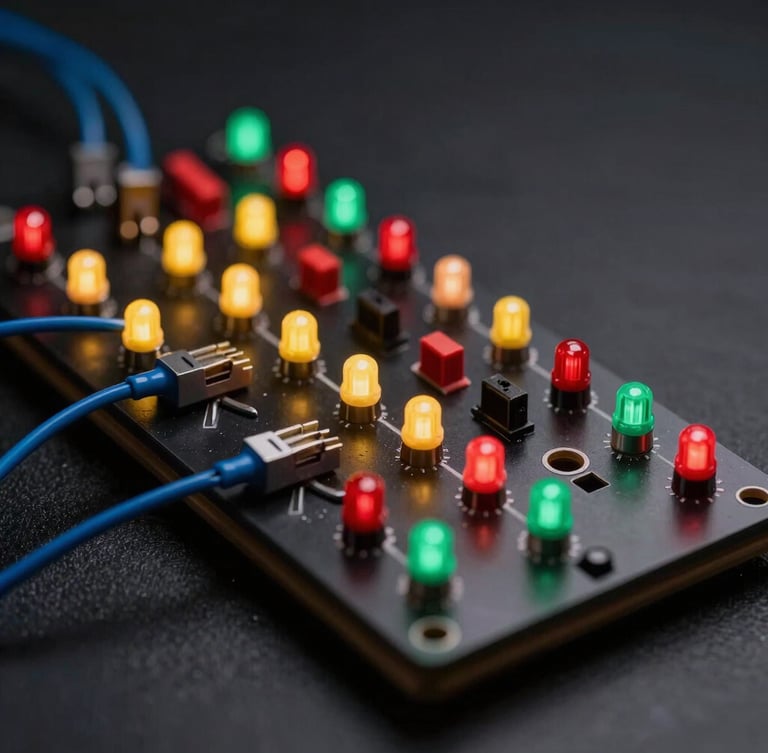
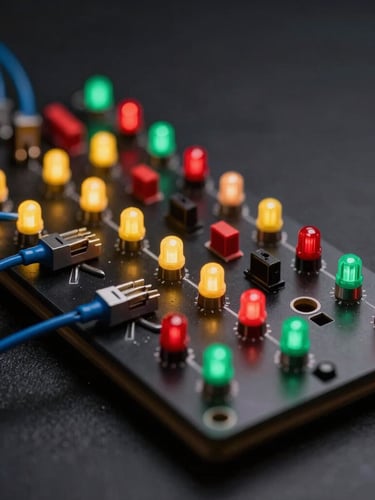
Density-based signal cycles
Unlike static timers, the controller evaluates queue lengths continuously. It translates physical infrared sensor data into dynamic green light intervals.
The three-state cycle
The Arduino firmware monitors inputs from the queue sensors. When density exceeds the threshold, the system triggers state transitions automatically.
Dynamic timing adjustments
Red stops vehicles, yellow counts down, and green scales dynamically. If the sensor detects a clear lane, the green cycle terminates early to service busy cross-streets.
Three core algorithms
Explore the pre-coded logic blocks included in the kit. Students upload these programs to test real-world smart city scenarios on their desks.
AI queue detection
Emergency priority
Accident prevention
Calculates vehicle density using infrared sensor arrays to adjust active phase duration dynamically.
Uses hardware interrupt pins to instantly force green signals for oncoming emergency vehicle signals.
Enforces safety yellow countdowns and all-red clearance intervals to secure the intersection.
Ready to wire your first smart intersection?